Jun 30, 2026
Depression in 2026 and Beyond: A Different Way of Understanding Human Suffering
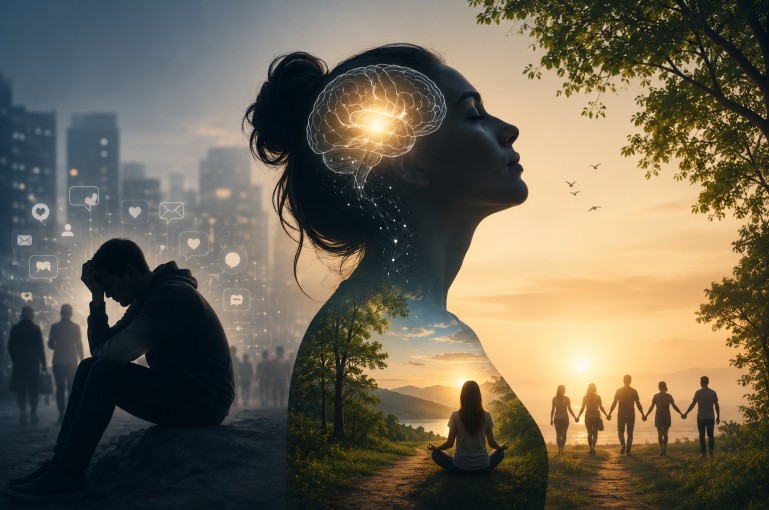
Explore a new perspective on depression in 2026 and beyond. Learn how modern lifestyles, digital overload, loneliness, and biological needs shape mental health, and why healing requires more than treating symptoms alone.
Over the years, I have become increasingly concerned about how we understand depression. While modern psychiatry and psychology have contributed significantly to identifying and treating severe emotional suffering, I believe that many experiences currently grouped under the label of depression represent something much deeper and more complex than a mental disorder alone.
Depression in the Modern World: A Growing Concern
As we move into 2026 and beyond, depression is likely to become one of the most common human experiences worldwide. Yet paradoxically, we may also become more confused about what it truly represents. We live in a world that is more connected than ever before, yet many people feel profoundly alone. We have more information than any generation in history, yet many struggle to find clarity. We have more convenience, more technology, and more entertainment, yet increasing numbers of people report emptiness, emotional exhaustion, and a loss of meaning.
From my perspective, depression is often not simply a disorder of the mind. In many cases, it is the consequence of a prolonged mismatch between human biology and modern living.
Human beings evolved within close-knit communities, surrounded by nature, physical movement, meaningful social bonds, and direct engagement with daily life. The nervous system developed in environments where connection, cooperation, exploration, and physical activity were necessary for survival. Today, however, many individuals spend much of their lives indoors, sitting for long periods, staring at screens, consuming information, comparing themselves with others, and navigating increasingly fragmented social relationships.
The nervous system experiences this modern environment very differently from how we consciously understand it. While the rational mind may recognize that life is safe, successful, and comfortable, deeper biological systems may experience chronic disconnection, unpredictability, loneliness, and a lack of meaningful engagement. Over time, these conditions can contribute to emotional shutdown, loss of motivation, fatigue, hopelessness, and a diminished sense of vitality.
The Impact of Information Overload and Digital Living
One of the greatest challenges of the coming years will be information overload. The human brain was never designed to process thousands of pieces of information every day. News alerts, social media feeds, endless videos, opinions, advertisements, and digital conversations continuously compete for our attention. The result is a nervous system that rarely receives genuine periods of rest. Many people are mentally stimulated but emotionally undernourished.
In my clinical observations, I increasingly encounter individuals who are not suffering because they lack information. They are suffering because they have lost connection—with themselves, with their bodies, with meaningful relationships, and with the natural rhythms of life. They know more than ever before, yet often feel less grounded than previous generations.
Another factor that may contribute to depression in the future is the gradual replacement of direct human experiences with digital substitutes. Online interactions can be valuable, but they do not fully replicate the neurobiological effects of face-to-face connection. Human beings regulate each other through voice tone, facial expressions, touch, shared presence, eye contact, and countless subtle signals that operate below conscious awareness. When these experiences become limited, the nervous system may experience a persistent sense of social deprivation even when a person appears socially connected online.
Reconnecting with Our Emotional and Biological Needs
The future may also bring increasing challenges related to identity and self-worth. Social media platforms have created environments where people are constantly exposed to the achievements, appearances, lifestyles, and opinions of others. The human brain evolved to compare itself within relatively small social groups. Today, individuals compare themselves with thousands of carefully curated lives every week. Such comparisons often create unrealistic standards that few people can achieve, contributing to feelings of inadequacy and chronic dissatisfaction.
From an affective neuroscience perspective, emotional wellbeing depends upon the healthy functioning of fundamental emotional systems that evolved over millions of years. Human beings need opportunities for exploration, play, connection, care, curiosity, purpose, and meaningful contribution. When these systems remain underutilized for extended periods, emotional suffering becomes more likely. Depression may sometimes represent not merely a chemical imbalance but a signal that important human needs have been neglected.
The Future of Depression Treatment: Beyond Symptom Management
This is one reason why I believe the future of depression treatment must move beyond symptom management alone. While medication can be valuable and necessary in many situations, it may not address all of the underlying contributors to emotional suffering. We must also examine sleep quality, physical activity, nutrition, social relationships, exposure to nature, nervous system regulation, meaningful work, and a sense of belonging. Mental health cannot be separated from the body, relationships, and environment in which a person lives.
The coming years may also challenge mental health professionals to rethink traditional approaches. Rather than asking only, "What disorder does this person have?" we may need to ask, "What experiences has this nervous system been deprived of?" We may need to explore how modern lifestyles influence biological regulation, emotional resilience, and psychological wellbeing.
I believe that depression in 2026 and beyond will increasingly be understood as a whole-person phenomenon. It will require an integration of neuroscience, physiology, psychology, relationships, community, and lifestyle factors. The future of mental health may depend less on finding new labels and more on helping individuals reconnect with the conditions that allow human beings to thrive.
Find Support with Softmind Wellness
If you or someone you care about is experiencing depression, anxiety, emotional burnout, or other mental health challenges, Softmind Wellness is here to help. Our experienced mental health professionals provide compassionate, personalized counselling and evidence-based care to support your emotional well-being. Take the first step toward healing—contact Softmind Wellness today and let our experts guide you on your journey to better mental health.
Ultimately, depression is not always a sign that something is wrong with a person. Sometimes it may be a signal that something important is missing. In a rapidly changing world, one of our greatest challenges will be helping people rediscover connection, purpose, belonging, and meaning. These are not luxuries. They are fundamental human needs. And perhaps the future of mental health lies not merely in reducing symptoms, but in helping people feel fully alive again.